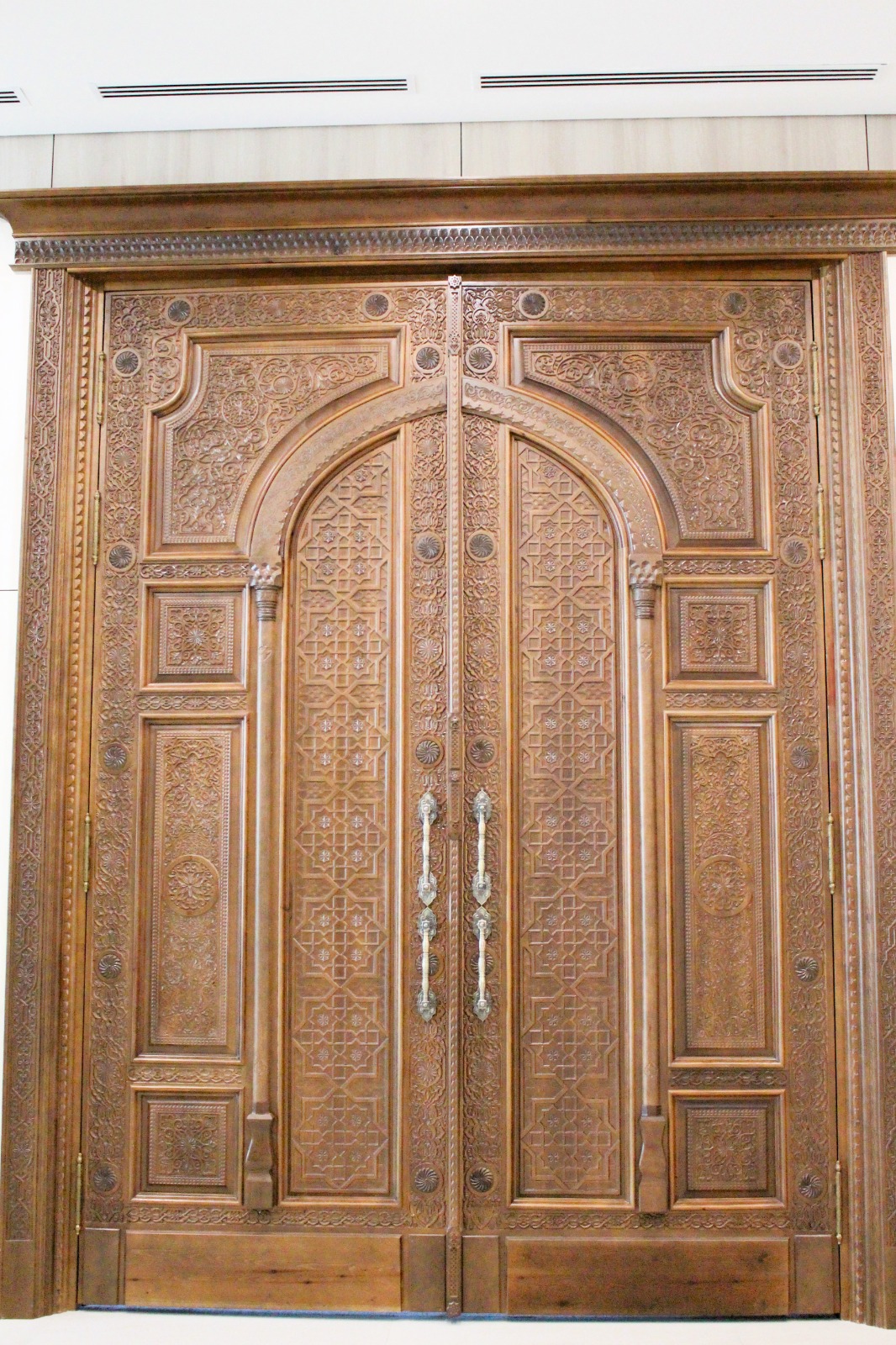
GRAND ENTRANCE GATE WITH INTRICATE WOOD CARVINGS
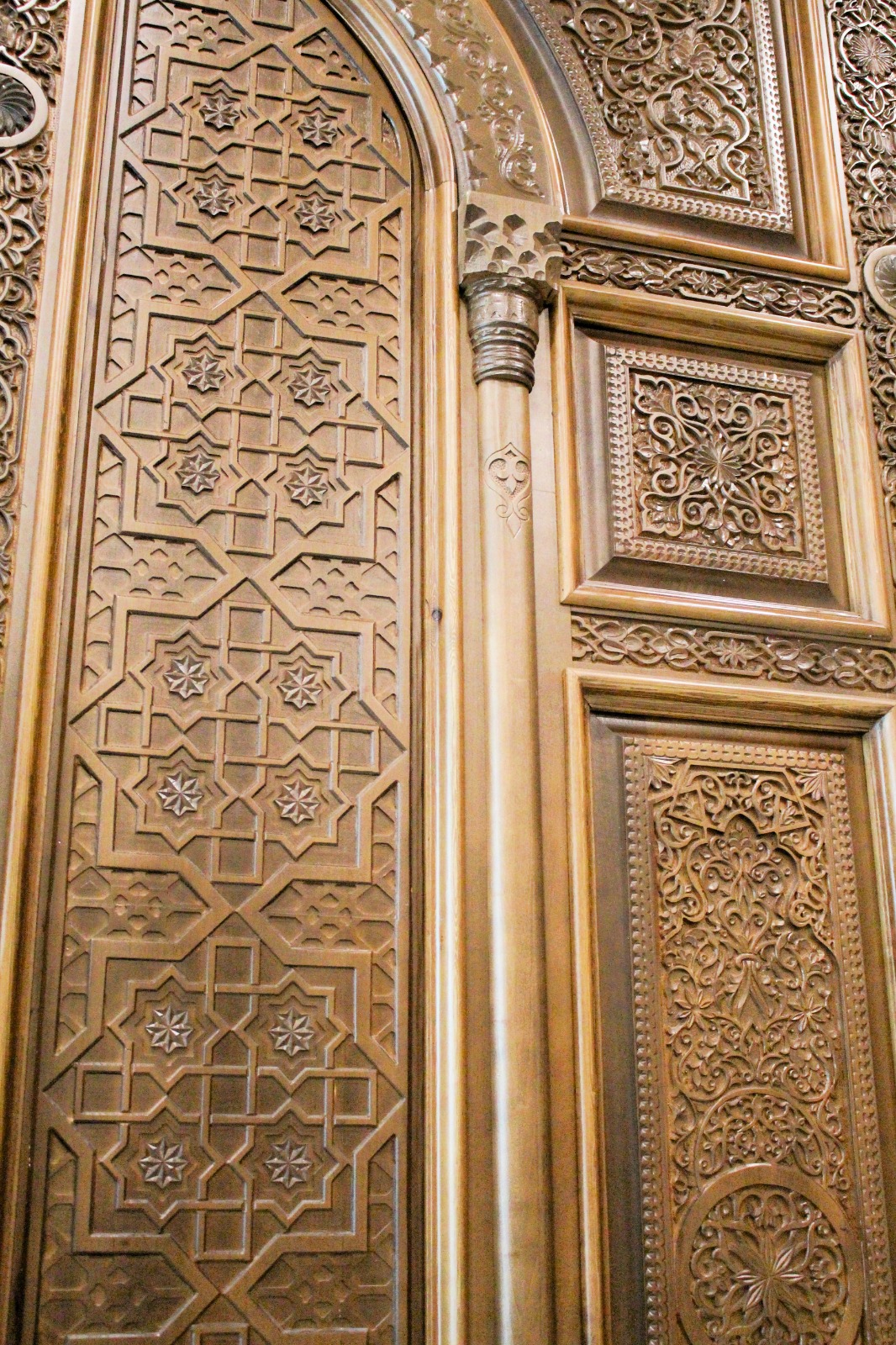
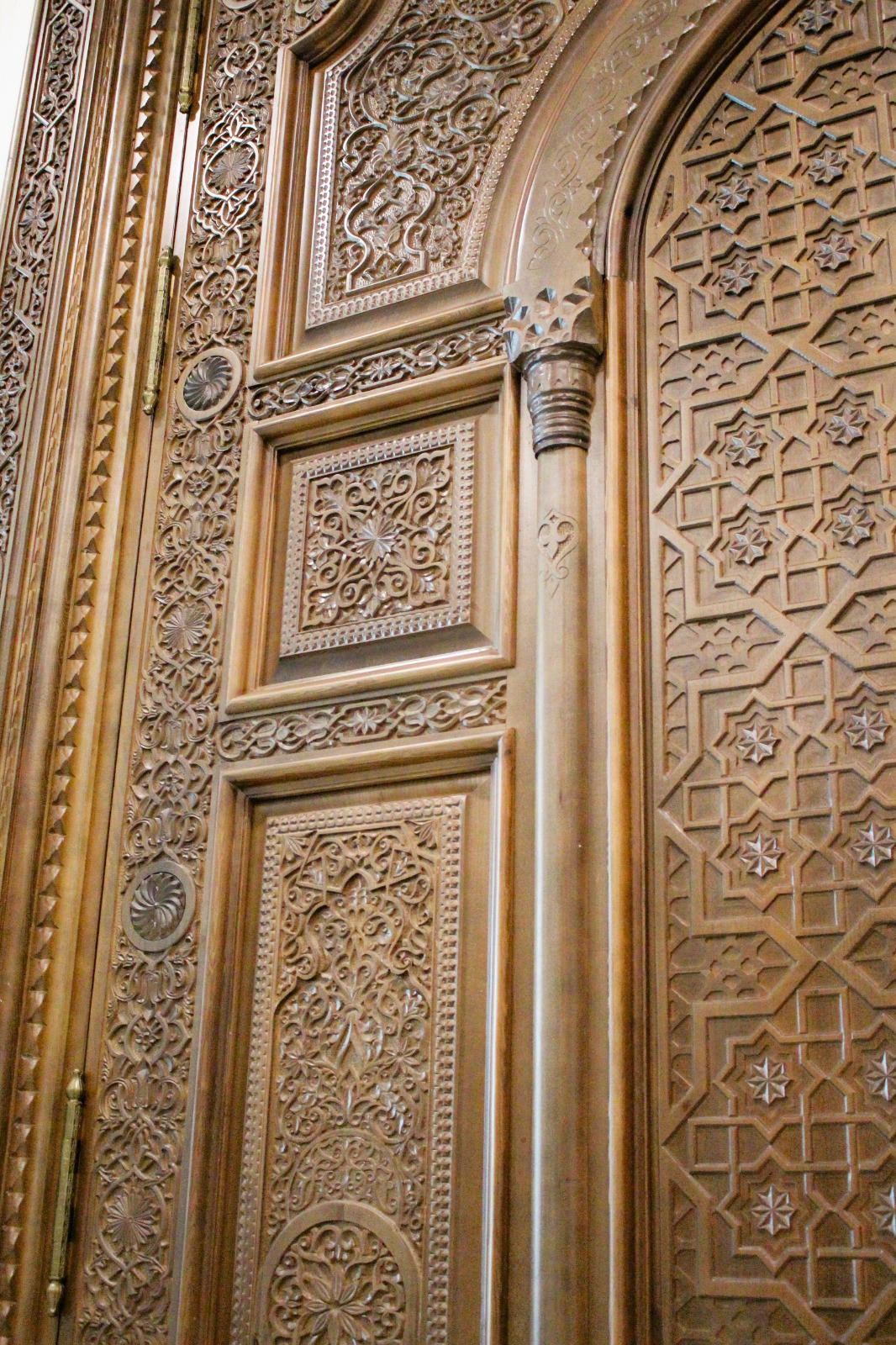
Before us stands a magnificent example of intricate wood carving – a double-leaf entrance door adorned with rich national ornaments, traditional patterns and the complex geometries typical of oriental carving styles.
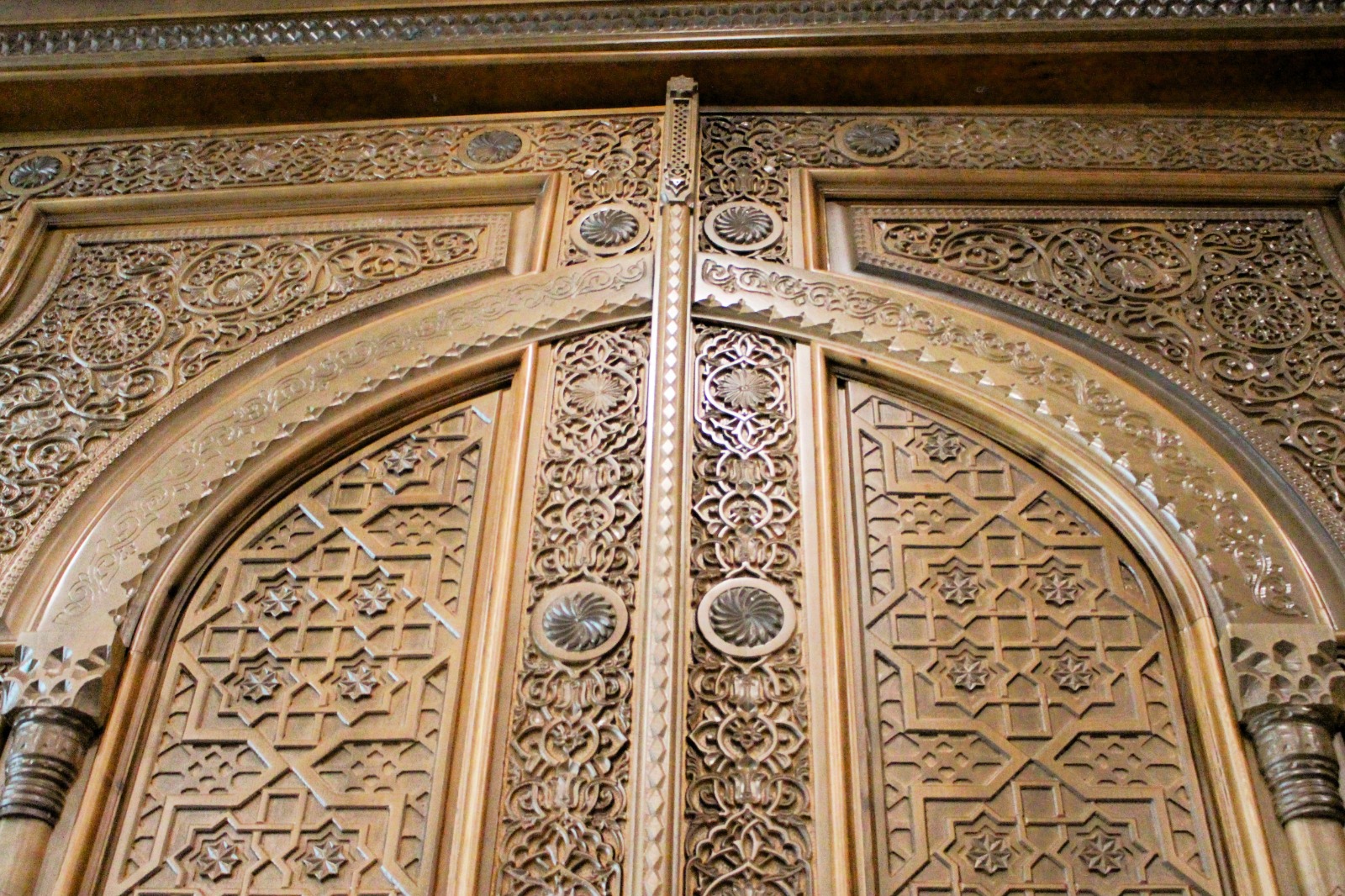
The door itself is crafted from beech wood and features a dark brown hue with geometric patterns and decorative elements evenly arranged across its surface. Particular attention should be given to the exquisite carvings framing the door, which demonstrate the masterful craftsmanship of the carvers.
It is made in the finest traditions of the Tajik school of wood carving, lending this architectural element a sense of grandeur while simultaneously creating a homely atmosphere – an intriguing contrast between the majestic historical facade and the signs of modern life.
The artwork is a gift from His Excellency President of the Republic of Tajikistan Emomali Rahmon to the Secretariat of the Conference on Interaction and Confidence Building Measures in Asia, commissioned by the Ministry of Foreign Affairs of the Republic of Tajikistan.
Wood carving in Tajikistan is one of the most important areas of folk crafts and national cultural heritage. It has deep historical roots and has been used for centuries as a means of expressing beauty, philosophical ideas, respect for the environment and unique nature. In the early pre-Islamic era (3rd–7th centuries), including the Bactrian and Sogdian periods, as well as during the Achaemenid and later Sassanid periods, wood carving was used in a simple form for construction and household items. Islamic and prosperous period (9th–15th centuries): During the Samanid era, the art of architecture and wood carving flourished, reaching its peak of development. Mosques, madrasas and government gates were adorned with intricate decorative carvings.
Another significant period in the development of wood carving was the Timurid era and the time of medieval Bukhara (15th–19th centuries). During that time, gates, columns, roofs and traditional homes were adorned with carved patterns and motifs. The main centres of wood carving were the cities of Istaravshan, Bukhara, Samarkand, Hissar, Khujand and Kulyab.
During the Soviet period, as various industries developed, wood carving experienced a decline, yet it endured as a form of folk craft.
In the 1970s and 1980s, craft schools were established, and woodcarvers were officially recognized with the title of “Folk Craftsmen”.
It was only during the period of independence that the revival of national and cultural traditions sparked a renaissance in the art of woodcarving. Today, wood carvings are widely used in government buildings, cultural centres, private residences and across the tourism industry.
A significant contribution to the revival and development of wood carving in Tajikistan was made by Master Ali Yahyoyev, widely regarded as one of the foremost figures in this traditional art. Master Ali Yahyoyev's students include Master Odil Bobojonov and his children, Azizjon and Akhmadjon Bobojonov.
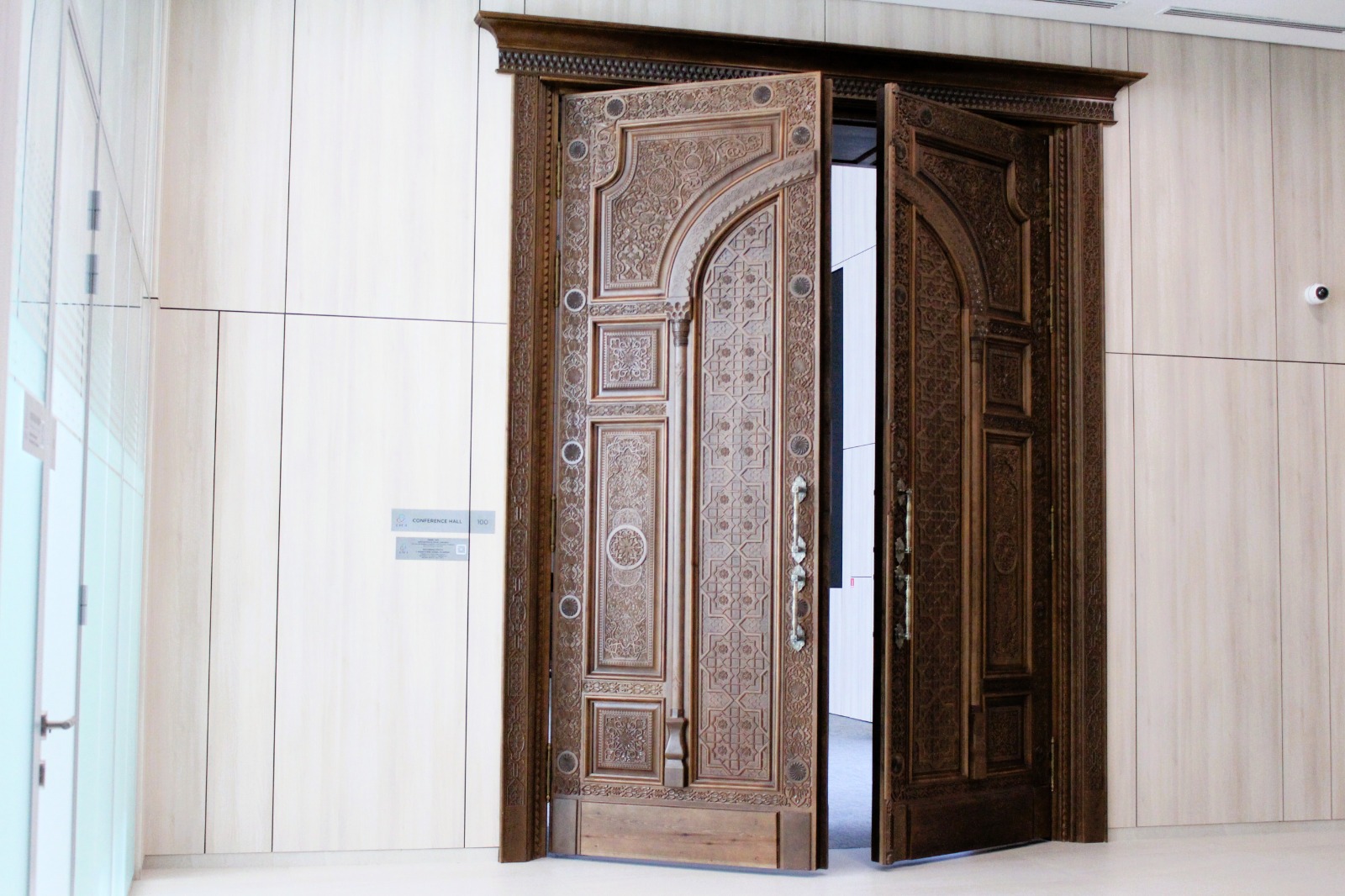
The impressive entrance door adorned with woodcarving elements is the result of the work of the aforementioned master craftsmen and their students, embodying the enduring legacy of centuries-old folk art.
The following craftsmen, along with staff members and students at the Republican College of Folk Crafts in the city of Istaravshan, contributed to the creation of the grand entrance door with intricate wood carvings:
1. Ali Yahyoyev – Artistic Director
2. Odil Bobojonov
3. Azizjon Bobojonov
4. Akhmadjon Bobojonov
5. Zilola Rofiyeva
6. Oyatullo Ismoilov
7. Obid Kudratov
8. Mashhura Adhamjonzoda
9. Khursheda Umejonzoda
10. Ekhrom Khidoyatov
11. Umar Pochoyev
12. Sherzod Azamov
13. Shoista Kodirova
14. Khadissa Karimova
15. Manuchekhr Mussoyev
16. Bobonazar Tagoymurodov
17. Sharifjon Kadyrberdiyev
18. Kodir Zinatullo
19. Aminjon Shodiyev