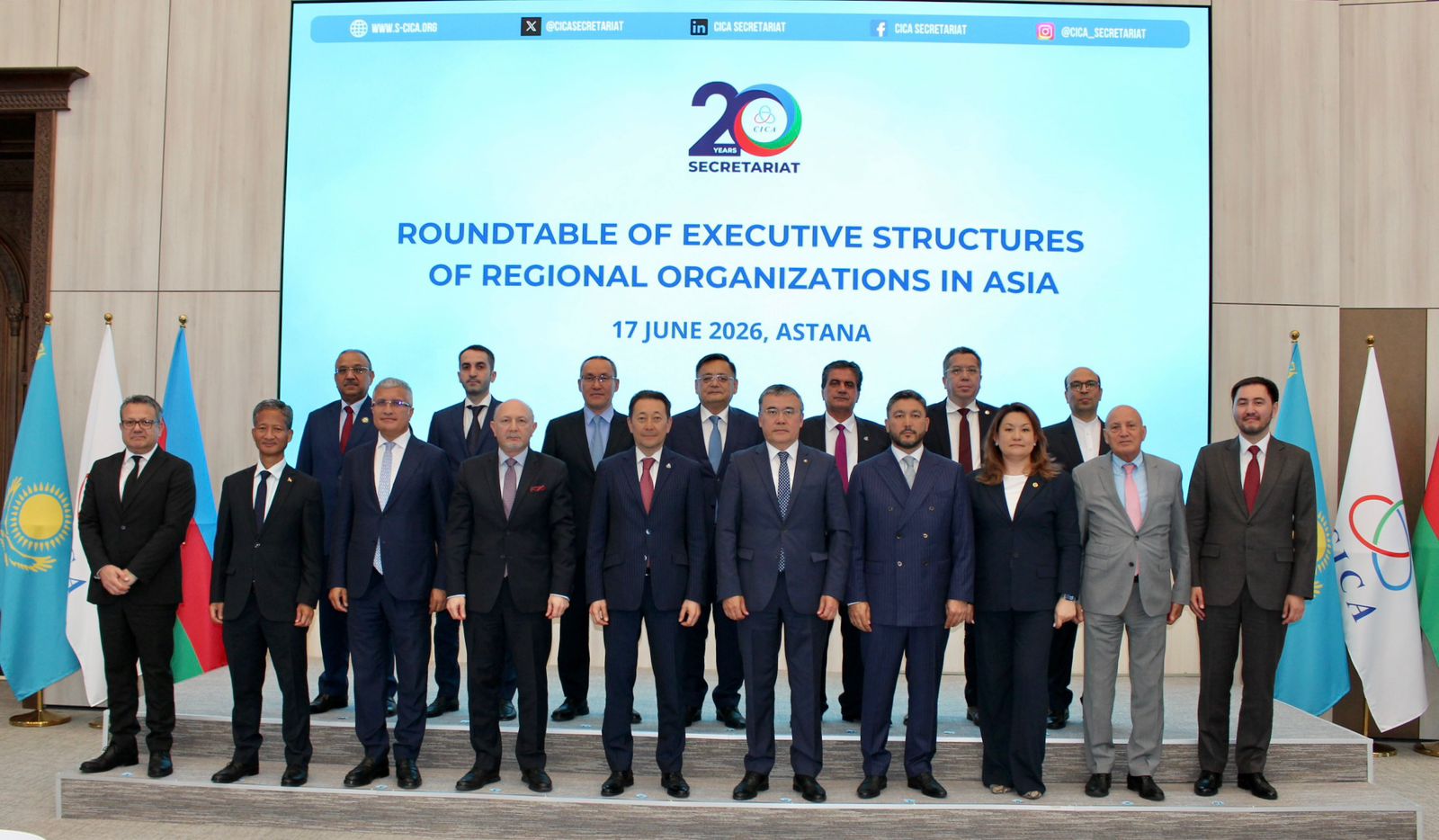
Astana, 17 June 2026 – The Secretariat of the Conference on Interaction and Confidence Building Measures in Asia (CICA) hosted a Roundtable of executive structures of the United Nations system and regional organization based in Asia. As a centerpiece of its 20th-anniversary program, a broad spectrum of regional and international organizations committed to the regional agenda.
The United Nations system was represented by the UN Regional Centre for Preventive Diplomacy for Central Asia (UNRCCA), International Organization for Migration (IOM) and the UN Office on Drugs and Crime (UNODC). Regional insights were provided by partner organizations, including Shanghai Cooperation Organization (SCO), its specialized body SCO Regional Anti-Terrorist Structure (SCO RATS) and Eurasian Economic Union (EAEU). The event also engaged CICA observer organizations – League of Arab States (LAS) and Parliamentary Assembly of Turkic States (TURKPA). They were joined by other key regional and international actors – Asia Cooperation Dialogue (ACD), Commonwealth of Independent States (CIS), Gulf Cooperation Council (GCC) and Organization of Turkic States (OTS). The discussion was further enriched by the expertise of heads of leading think tanks from India and Kazakhstan and former CICA Executive Directors.
In his opening remarks, CICA Secretary General Ambassador Kairat Sarybay invited participants to reflect on the realities of a shifting landscape, noting that today’s interconnected threats can no longer be contained by individual nations or isolated organizations. He further underscored that in this time of unprecedented complexity – from supply chain disruptions and climate vulnerability to emerging transnational security threats – the mandate for effective, proactive multilateralism has become more urgent than ever.
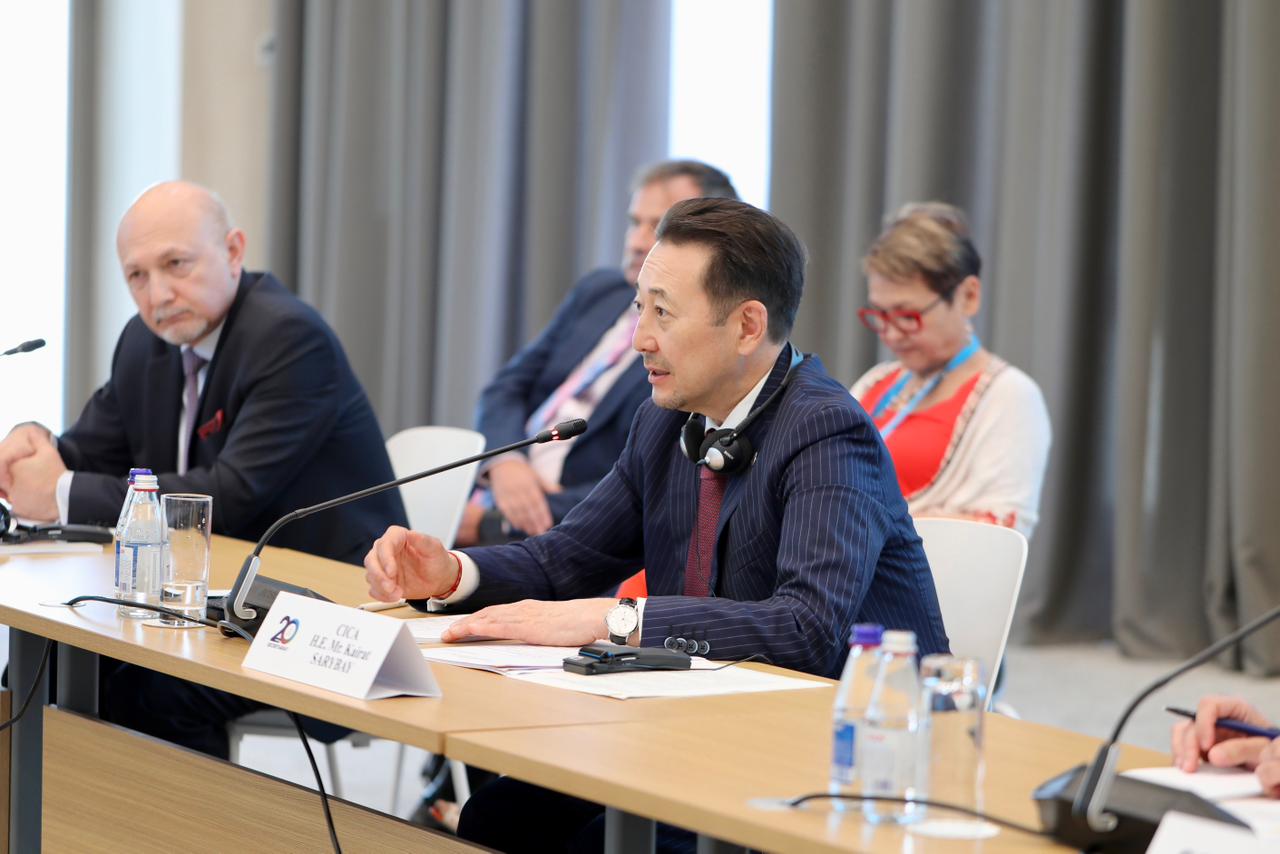
To ensure high-level political aspirations translate into action, Secretary General Sarybay highlighted the essential role of executive structures. He reaffirmed CICA’s pragmatic, result-oriented approach, emphasizing its readiness for open dialogue and practical cooperation with partner organizations to deliver tangible benefits across the region.
During the first session, dedicated to the challenges of effective cooperation in a changing global environment, participants emphasized that rising global uncertainty and shared security threats demand a renewed and more robust framework for international cooperation. In this context, CICA was recognized as key platform for shaping an inclusive Asian architecture, given its consensus-based approach in a multipolar environment. To foster institutional synergy, a proposal was introduced to establish a regional observatory to monitor and evaluate transport, digital, and energy connectivity across the region.
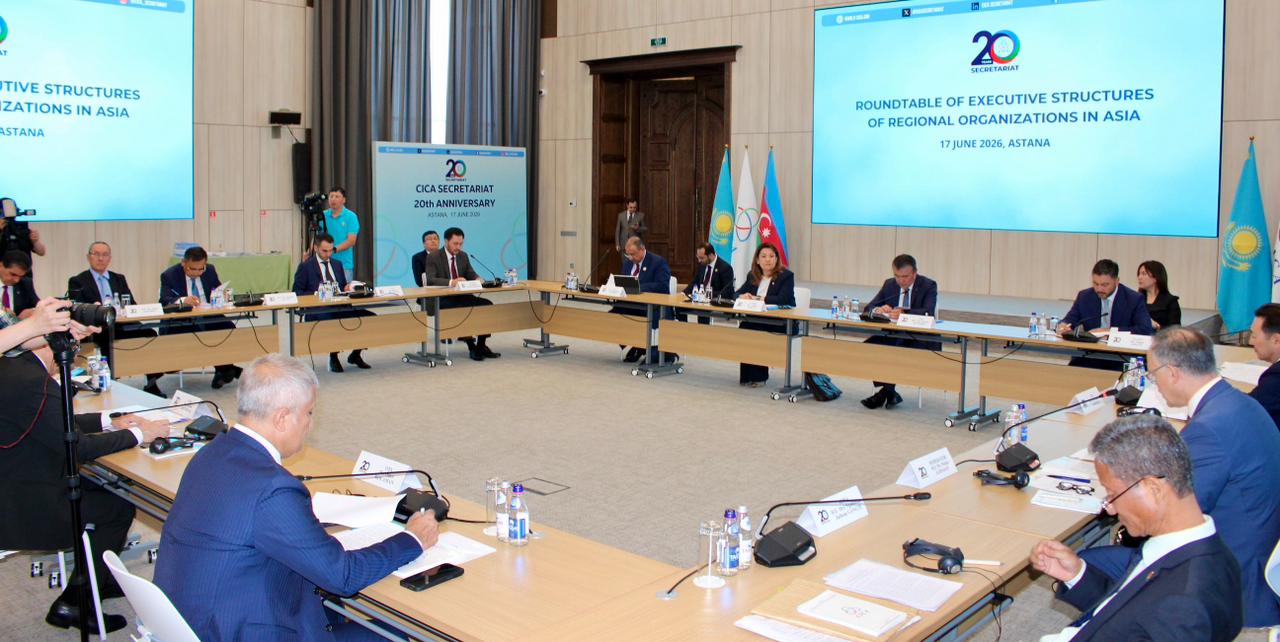
The second session, “The United Nations System: Priorities and Challenges,” examined the strategic synergy between global mandates and regional platforms. Participants highlighted that partnerships between the UN and regional organizations like CICA are vital for conflict prevention, noting that peace is inherently regional in practice.
The dialogue framed transparent migration governance as a key confidence building measure for regional stability. Furthermore, it was stressed that global mandates must deliver tangible results on the ground. To achieve this, institutions must align their efforts and coordinate closely to ensure operational synergy.
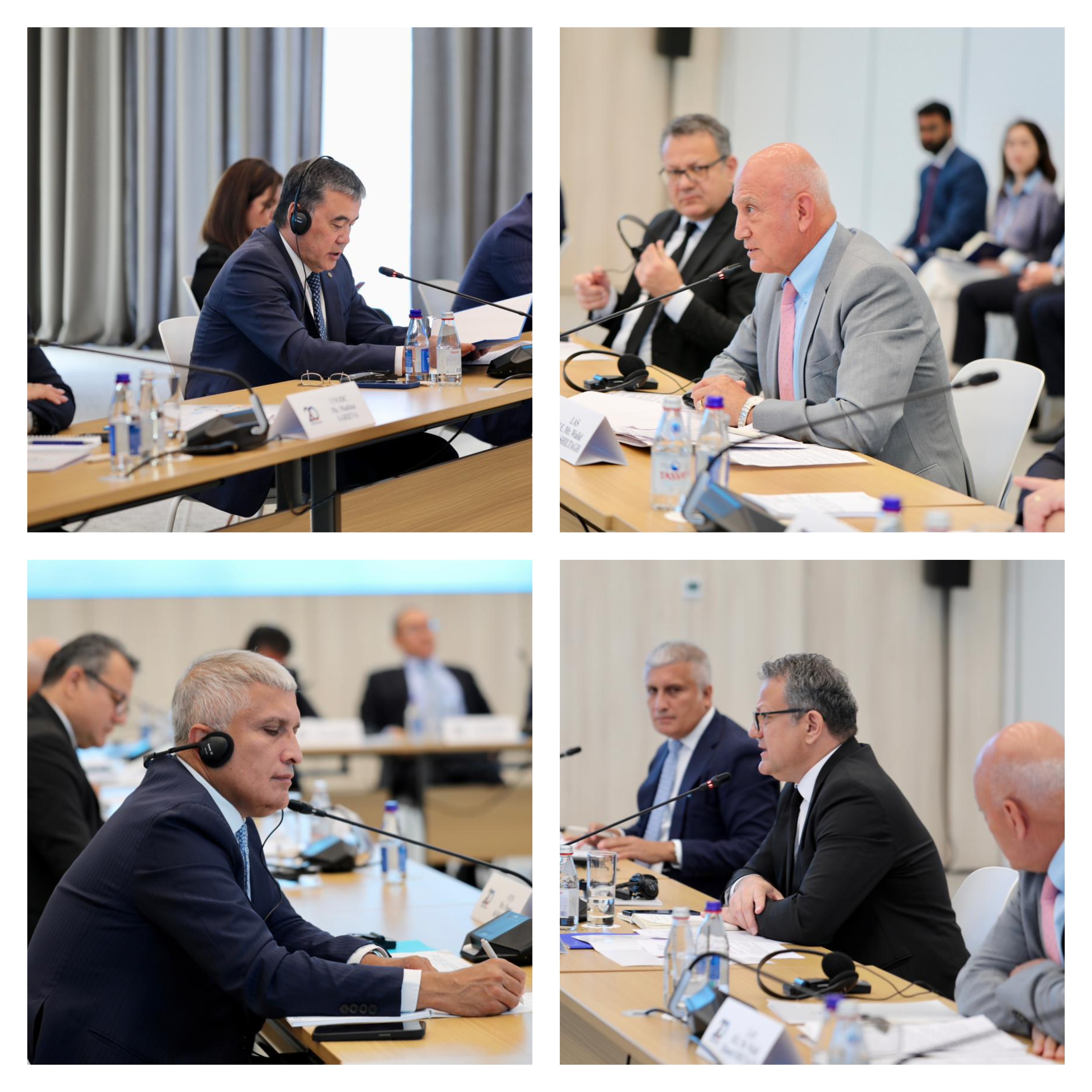
As the third session focused on the essential role of executive structures in fostering cooperation, it provided a platform for the participants to share their firsthand expertise and outline practical approaches for deepening synergy and integration.
Participants agreed that in today’s turbulent world, continuous dialogue is essential for stability. They emphasized that regional organizations act as key pillars for peace, calling for flexible partnerships that allow institutions to collaborate while maintaining their unique roles. The discussion also highlighted the growing value of multilateral platforms and the need for global governance reforms to better reflect modern geopolitical realities.
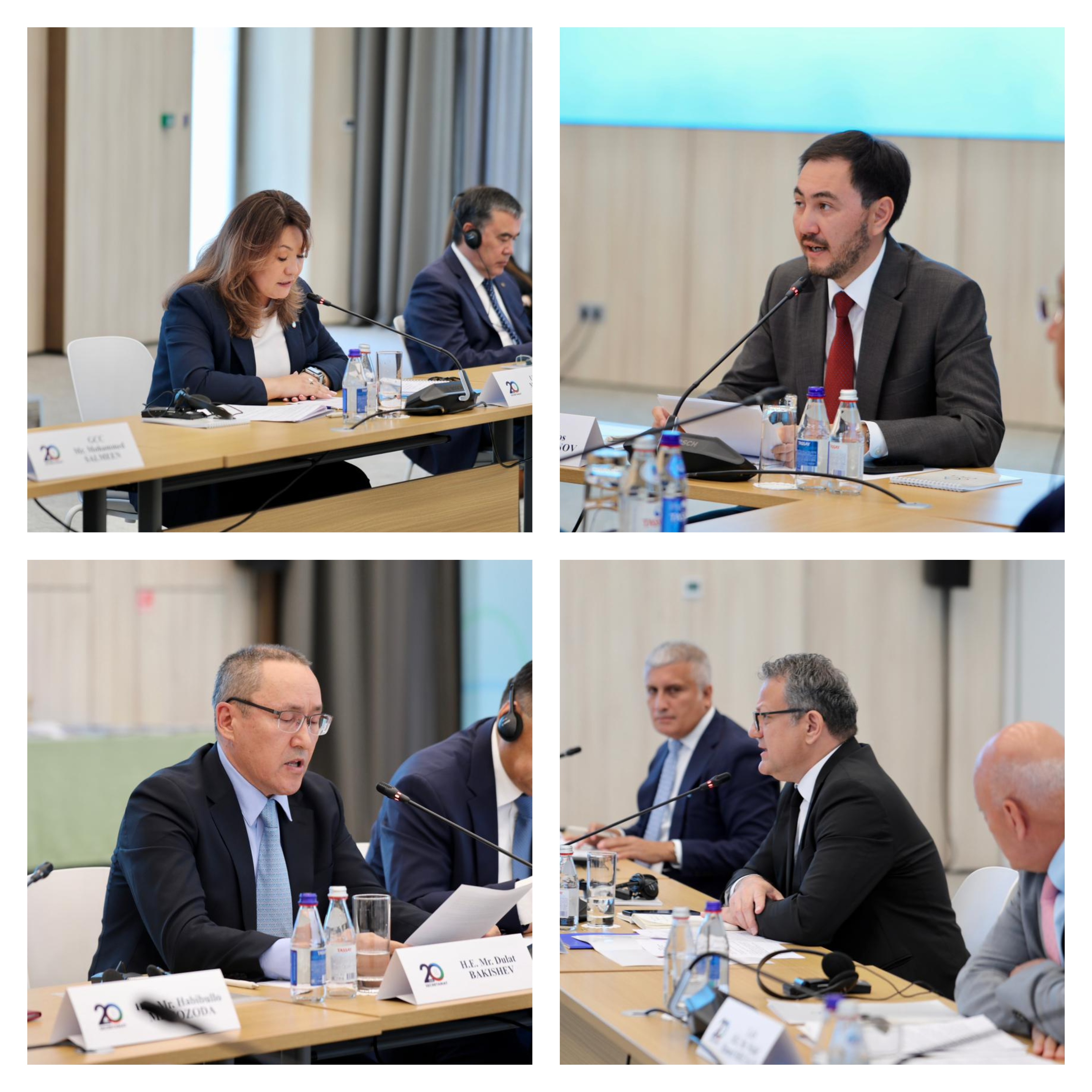
To turn synergy into action, attendees stressed the need to align institutional goals to maximize collective impact. Key drivers for deeper integration include parliamentary diplomacy, legislative harmonization, and long-term strategic planning. Furthermore, participants identified digital and industrial collaboration as vital areas where joint efforts can bridge economic gaps and boost regional growth.
The Roundtable concluded with a shared recognition that international and regional organizations are partners, not competitors, working together to address global challenges and the 2030 Agenda for Sustainable Development. Acknowledging that the transition from conceptual discussions to concrete implementation is a gradual process, participants agreed that this forum should evolve into a regular practice, serving as a pillar of stability and a platform for sustained dialogue to turn shared commitments into tangible results.
