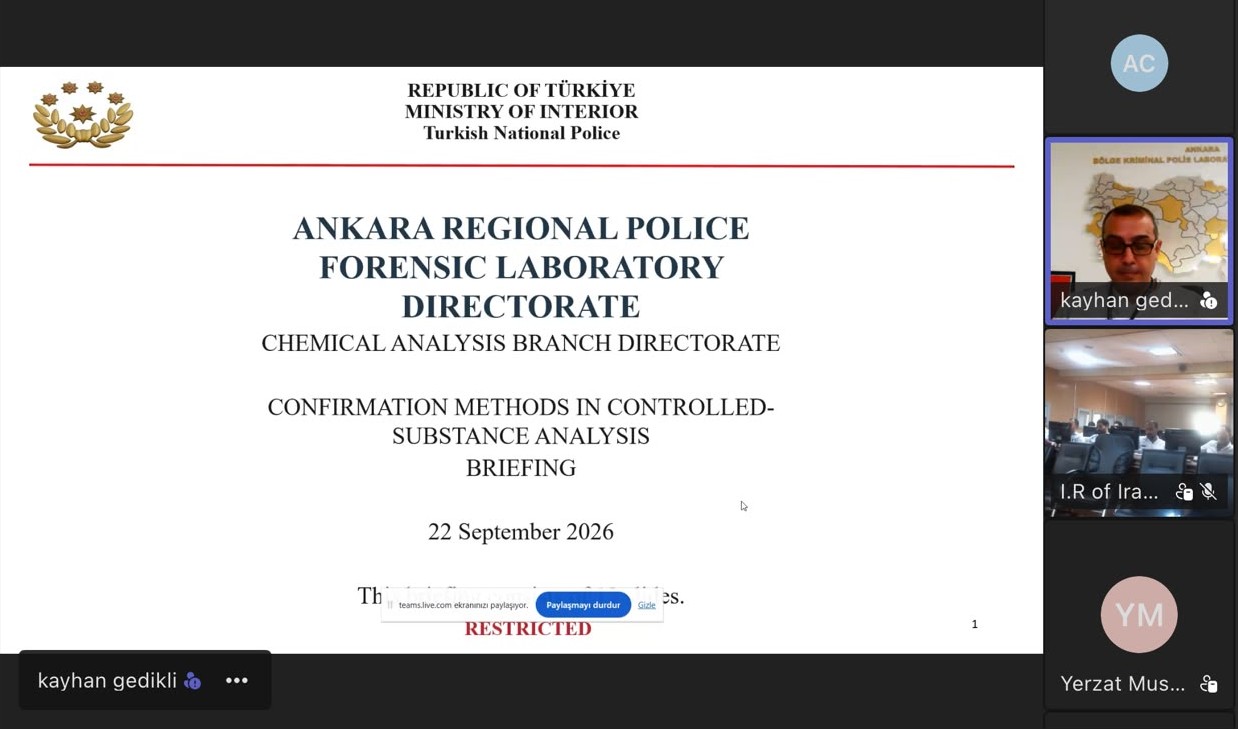
Astana, 30 September 2026 – A series of online forensic chemistry trainings was conducted for law enforcement specialists, forensic laboratory personnel, and crime scene investigators with participation of 12 CICA Member States from 21 to 30 September 2026. Organized by the Turkish National Police Forensic Department and the Ankara Regional Police Forensic Laboratory Directorate, the programme focused on strengthening practical capacities in evidence analysis, sample preparation, and advanced laboratory techniques.
The training cycle opened on 21-22 September with a module dedicated to illicit drug analysis, where experts presented protocols for the qualitative and quantitative identification of controlled substances, including cannabis, opium alkaloids, amphetamine-type stimulants, cocaine, and New Psychoactive Substances (NPS). Discussions covered sample collection techniques, method validation, and standards for converting analytical data into court-admissible forensic reports.
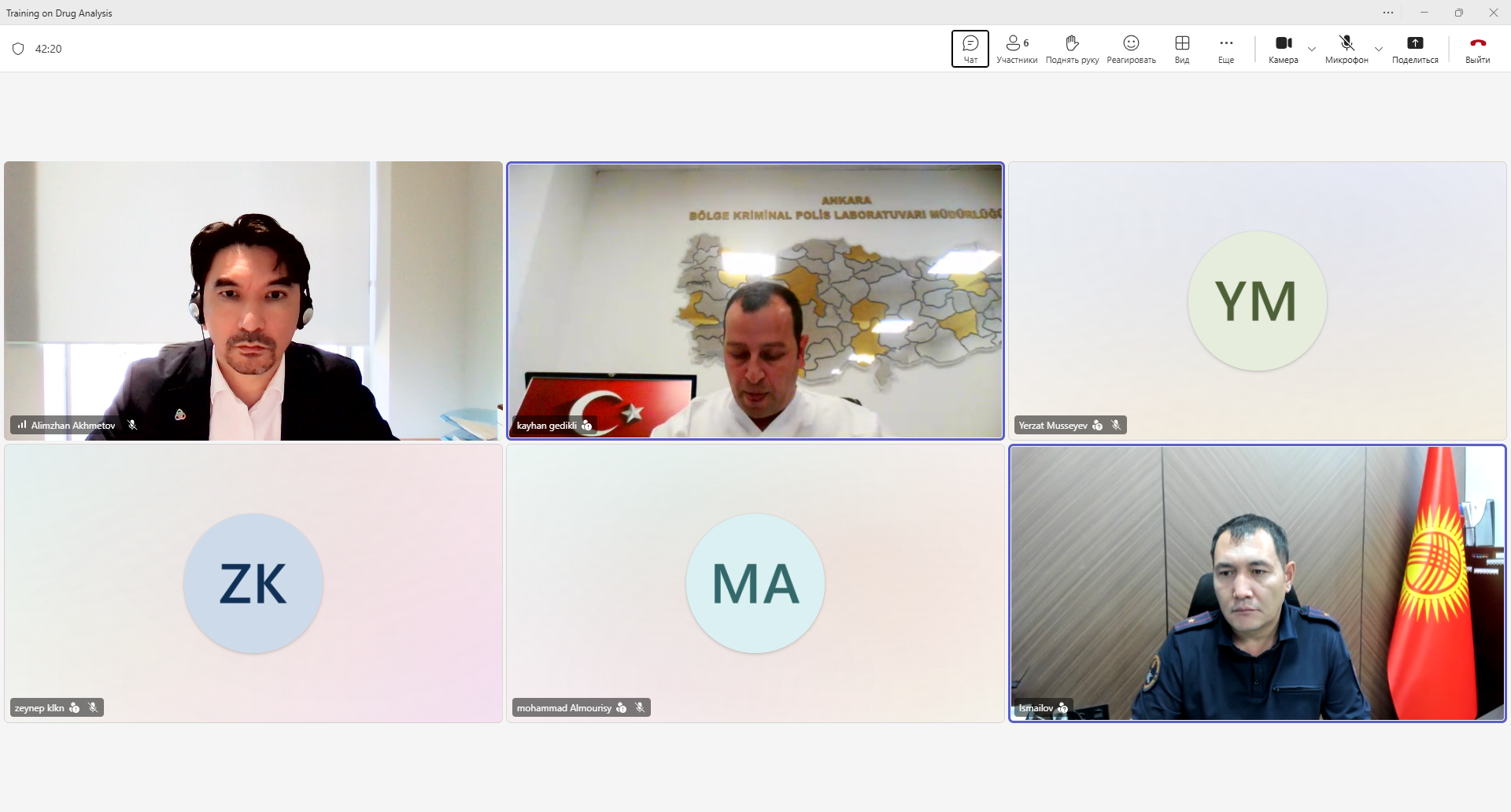
Building on these foundational analytical schemes, the second module on 23-24 September addressed the examination of commercial and improvised explosives alongside post-blast residue analysis. Participants reviewed a continuum of laboratory methods ranging from preliminary colorimetric tests and Thin Layer Chromatography (TLC) to advanced instrumental techniques, including Fourier-Transform Infrared Spectroscopy (FTIR), High-Performance Liquid Chromatography (HPLC), Ion Chromatography (IC) for inorganic components, and LC-MS/MS.
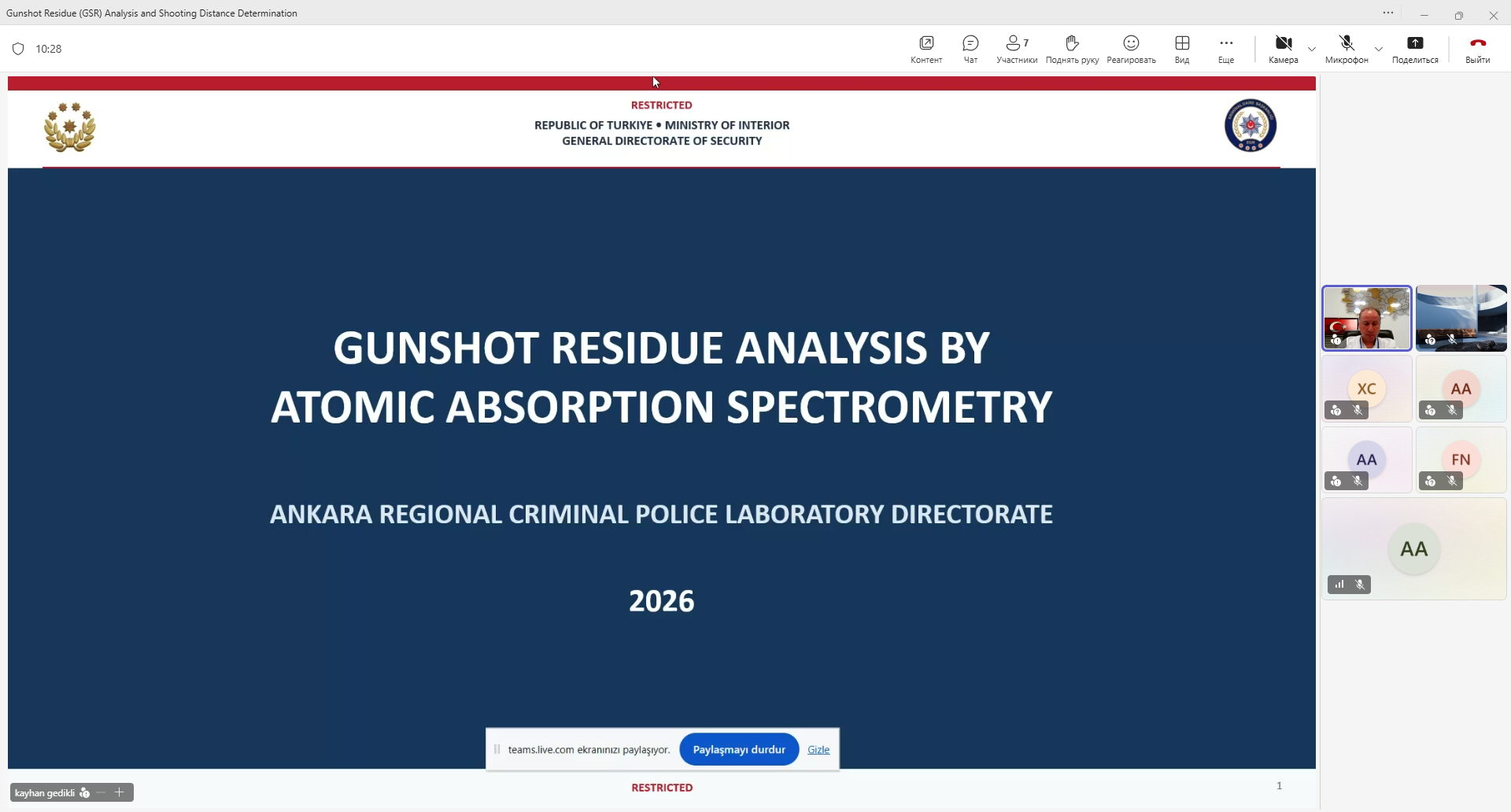
The series concluded on 29-30 September with a module focused on gunshot residue (GSR) analysis and shooting distance determination. Technical presentations highlighted standardized procedures for GSR sample collection and detection using Atomic Absorption Spectroscopy (AAS) and Scanning Electron Microscopy with Energy Dispersive X-ray Analysis (SEM/EDX), demonstrating how physical and chemical findings support scientific crime scene reconstruction.
Implemented under the CICA Plan of Implementation of Confidence Building Measures (CBM) for 2026 (Items 23, 24, and 25), the initiative reflects the active role of Türkiye as the coordinator of the priority area "New Challenges and Threats (general)" under the "New Challenges and Threats” dimension.
By providing specialized trainers and technical methodology through the Turkish National Police Forensic Department and the Ankara Regional Police Forensic Laboratory Directorate, the programme contributed directly to regional capacity building, evidence integrity, and practical confidence-building efforts among CICA Member States.
